Spellhook: Designed for Multiplayer
How Cable Nest built Spellhook's multiplayer before they built the rest of Spellhook
The Disassembly Club
Every week, for years, the Cable Nest prototyping team held a meeting they called the Disassembly Club. The idea was simple: take something in games you don't fully understand, break it apart, and figure out how it actually works.
Since multiplayer is often unfamiliar and unpleasant, it was a theme that came up constantly.
"We had to learn multiplayer," said Fredrik "Frell" Winell, Co-Founder of Cable Nest and Head of Art at Gro Play. "We really see that as a direction we should be heading."
This story is a bit different from our other Cable Nest story from Tentacle Tango. With Tentacle Tango, the team was pushing to overcome a mid-development decision to add multiplayer, so things were rough. It required some serious work (and incredible talent of Cable Nest!) to pull it off.
With Spellhook, it's about what happens when a studio does solid preparation work first and then can focus on flawless execution with fewer surprises.
A studio that wanted to play something fun
Cable Nest is the console and PC brand of Gro Play, a Swedish studio based in Stockholm. Gro Play has spent fifteen years making kids' games for mobile. Cable Nest was the answer to a question that had been building with the team for years: "When do we get to make something that WE want to play?"
"We've been doing kids' games since forever as Gro Play," Winell said. "We really enjoy making those games, but we've also been longing to build something fun for ourselves. That's how simple it is. We want to play something together, as friends."
Hugo Cremer, the programmer responsible for Spellhook's networking and gameplay code, has been at the studio for six years. He came in with prior networking experience, almost entirely from Photon. When Cable Nest committed to multiplayer as a foundational element for their games, it was his job to make big decisions about which tech to choose.
They looked at most of the major options: Photon PUN, Fusion, and Quantum. Fishnet. Mirror. Unity Netcode. And finally coherence, which was relatively new at the time.
Kristian Lundquist, co-founder of Cable Nest, explains why multiplayer is central for Cable Nest:
"Multiplayer is damn fun. It may sound corny or idealistic, but we also genuinely believe that social gaming makes the world a better place.
For Cable Nest, prioritizing multiplayer from day one was a strategic commitment to the kind of studio we are building. It ensures that the shared social experiences we are so passionate about remain at the heart of what we create for ourselves and our players. "
The game
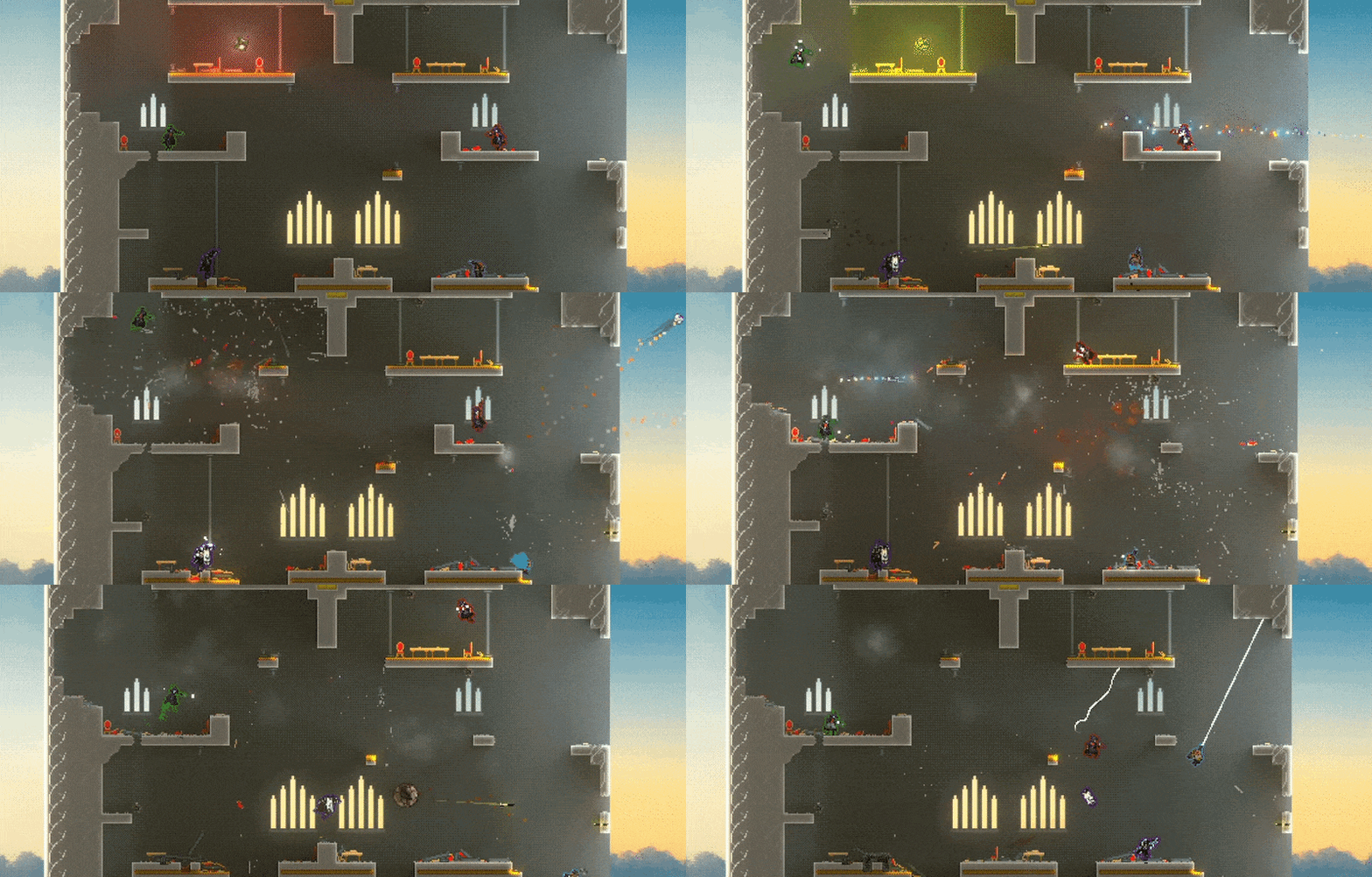
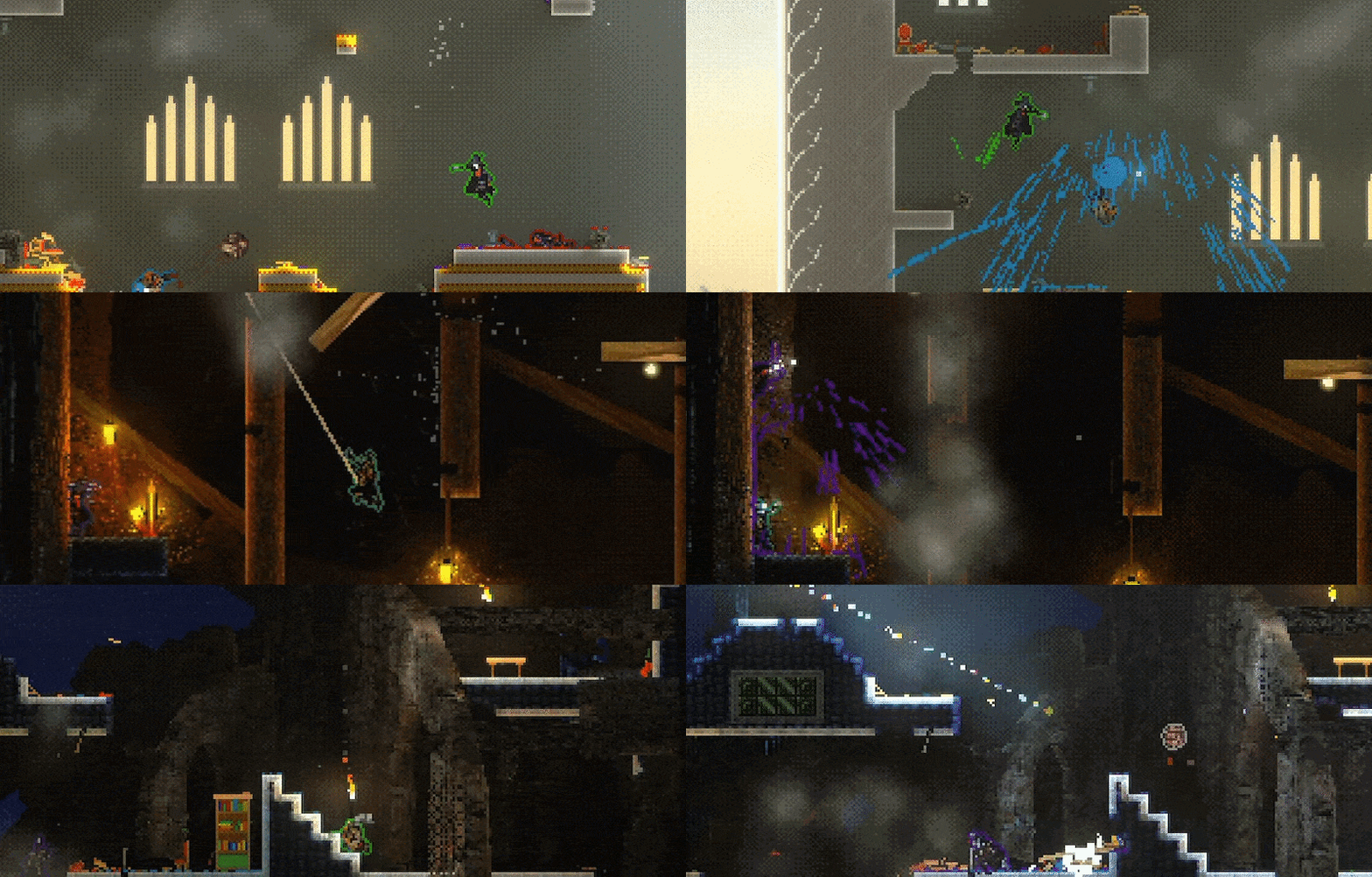
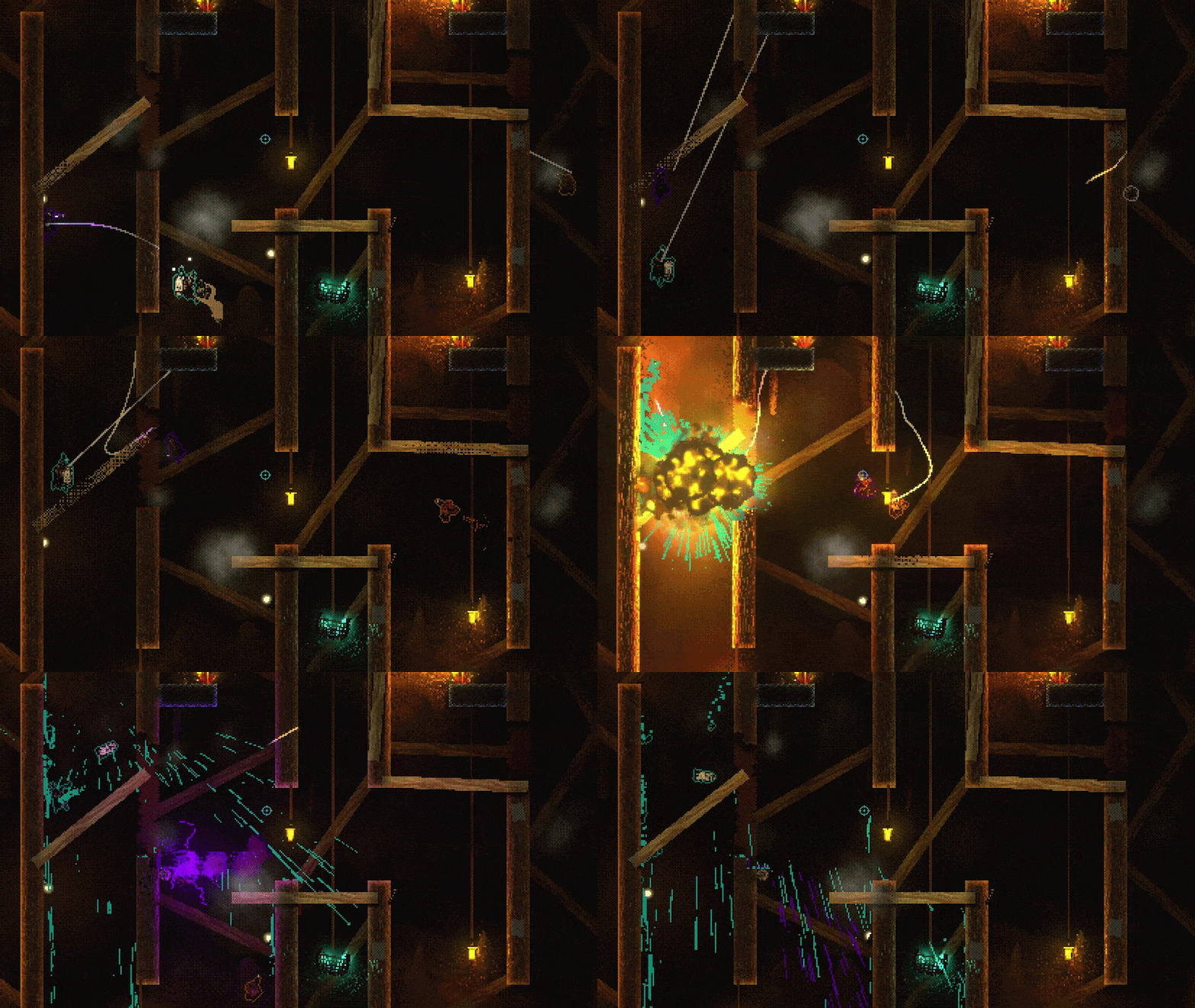
Spellhook is a physics based action game built around a zero cooldown grappling hook. Players swing, launch, and slide through gothic arenas. One hit kills you. Three classes: Mage, Paladin, and Earth Elementalist. Each one has completely different movements and abilities. A four player competitive PvP mode and a solo roguelite where you build a tower, craft ability shards, and eventually hunt a fallen god. It's got a lot going on.
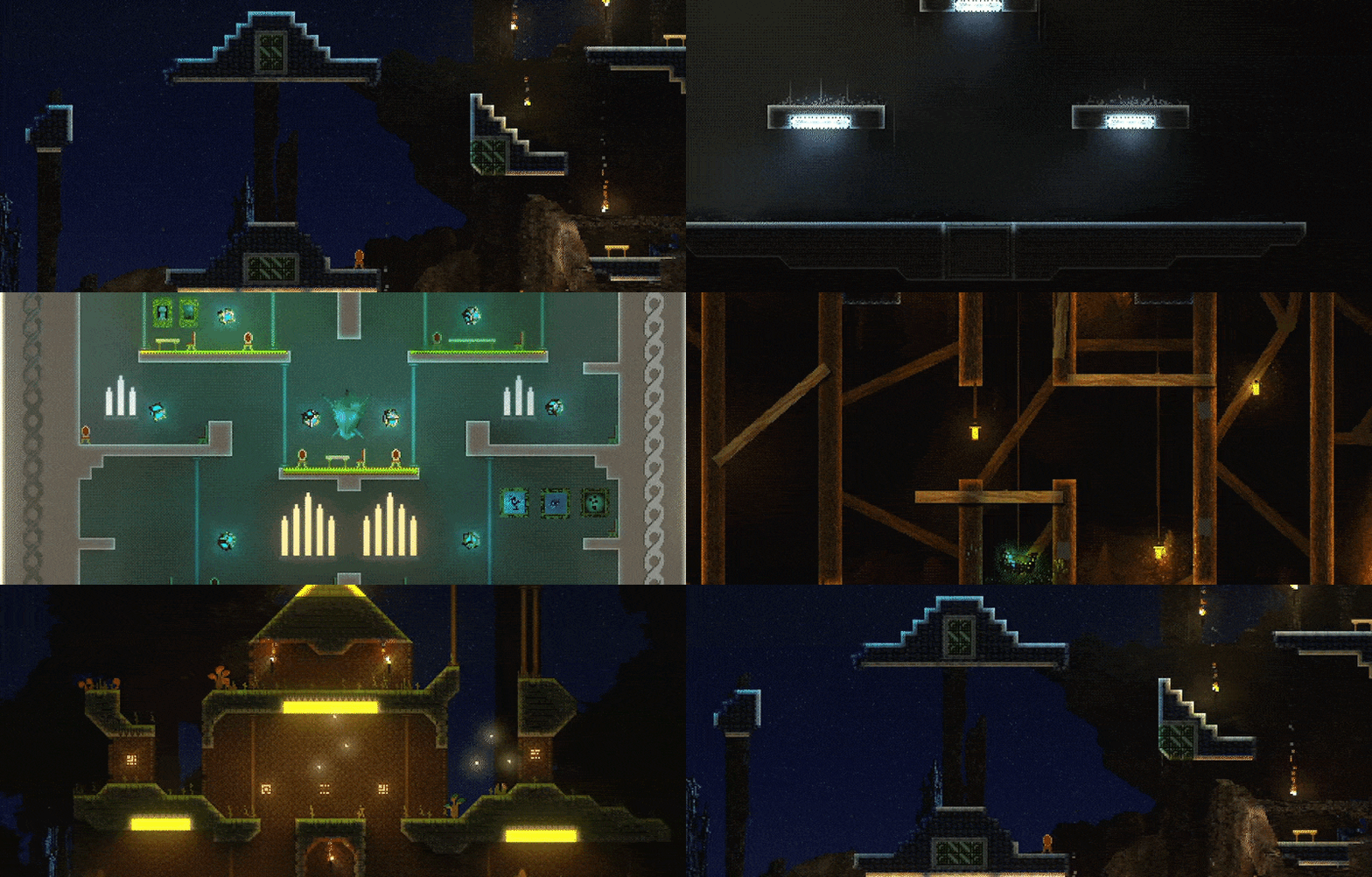
Cable Nest calls it "a dark fantasy retro fever dream." Winell, who also built the game's custom rendering pipeline from scratch, describes his aesthetic target: "I kind of wanted something slightly janky and weird, with a lot of dark variety." We think he did an incredible job.
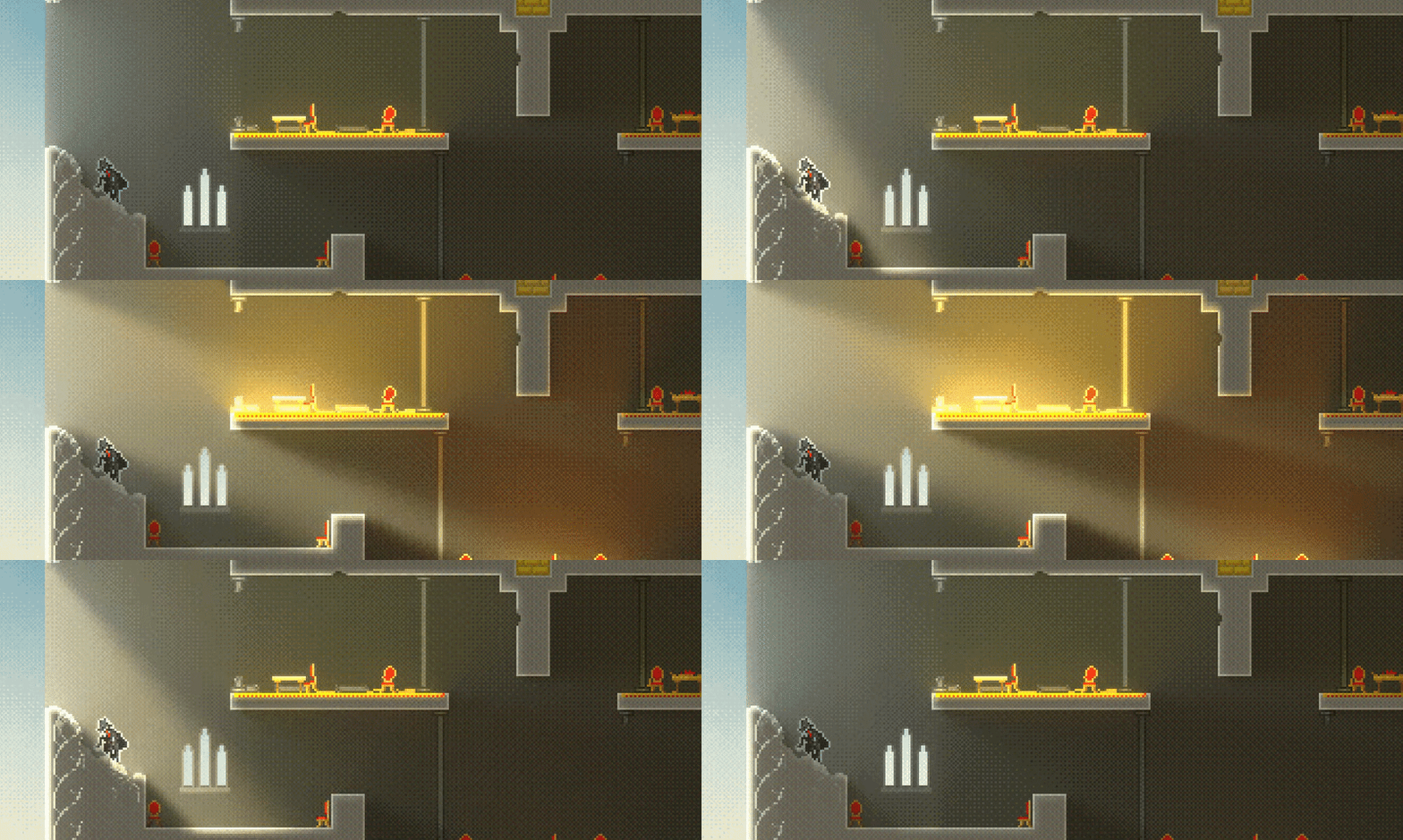
Spellhook and Tentacle Tango came from the same week of internal prototyping. The mission for their internal game jam: find a new take on the 2D character controller. Hugo's earliest contribution was the grappling hook mechanic. The art direction grew partly out of a technical problem: when a projectile is also a light source in standard Unity 2D lighting, you get flickering. Luckily, Winell had a radiance cascade rendering solution already developed. The visual identity is, in some part, a consequence of solving that.
Why coherence over Photon
Cremer's familiarity with Photon made the evaluation period more useful. He knew what he would be walking away from.
One major thing pushed the decision. In Photon, multiplayer and single-player code have to be written separately. If you want an object to behave the same way in both modes, you write two different scripts. coherence does not work that way. The same prefabs and the same scripts both run as single-player when there's no connection and as multiplayer when there is a connection. No duplication, no parallel codebases.
"You can choose to just leave the code as-is," Cremer said. "This runs normally, it's not an issue."
For a game with both a solo roguelite mode and competitive online PvP, this matters a lot. The single-player campaign and the multiplayer arenas share code. Keeping that unified is part of what makes building both simultaneously manageable.
Cremer found coherence significantly easier to get started with, and even team members without networking backgrounds could use the tooling. He estimated it took him roughly half the time to reach a solid grasp of coherence compared to Photon, and he came in with plenty of Photon experience already.
"At face value, coherence is quite simple in how you set it up, so the other members of the studio who didn't have as much experience could use it more easily," Cremer says. "But it has quite some depth as well, which we found through our usage of it over the years."
Designed from day one
"We have a very clear distinction of ownership of everything in the game, always," Winell said. "It was designed up front to maintain that ownership."
The team built the PvP experience first and used it to understand how the game actually played before developing the single-player layer. Knowing exactly who owned every object in every situation was the basic design requirement that networking had to satisfy, instead of an afterthought it had to accommodate.
Kristian explains the importance of having that foundation in place:
"As a small indie studio, we appreciate having the networking technology in place from the start, as it allows us to focus on what we do best and what we are most passionate about: creating fun, social game experiences."
As little networking as possible
Cremer's approach to networking Spellhook follows directly from the ownership principle.
"My solution is to do as little networking as possible," he said. "Anything we can't keep deterministic, that's what we sync."
Player characters are synced continuously and use interpolation to smooth out movement between updates. Projectiles (the constant stream of them flying across the arena) are locally simulated on each client. Position is not sent over the network unless the projectile is complex. For most shots, both clients run the same simulation and only need to agree on spawn and collision. Destructible environments run locally and sync, catching up naturally without visible correction.
The result is a competitive, one hit kill game where players hit what they aim at.
"Our biggest complaint when we did playtests with Photon was people feeling that they got hit when they weren't supposed to, or feeling like they hit somebody but they didn't," Cremer said. "That has pretty much not ever been an issue with coherence."
There is one place coherence's interpolation needed more thought: projectiles spawning from object pools. Early on, objects appeared to fly in from offscreen when interpolated from their pool position. The fix was to enable interpolation after an object is properly placed, not before. It's the kind of thing that gets figured out once and then stays invisible.
Multiplayer tools for the whole team
A reliable sign that any tool is working well is when the non-experts on the team can actually use it well.
As the head of art and the studio's graphics programmer, it isn’t Winell’s job to work on networking, and yet he also writes coherence code when his work touches the networking layer.
"I've definitely written some code using it. That's simple enough," he said. "Using it in the editor is kind of plug and play for the most part. You just have to check what values you want to sync, and then it's kind of already set up. It's doing a lot of work by itself."
Winell describes his role at the studio as "a bit of the crazy scientist," always pushing to explore new things, willing to pick up a new engine or tool or idea. The studio philosophy, as he puts it: if something looks scary and you don't know about it, you have to learn it.
"We keep going back to Unity," Winell said. "And we expect to keep using the same multiplayer solution. We aren't moving away from coherence anytime soon."
Cremer adds, "I feel like I can use coherence pretty much to its full extent right now. I don't have any more questions, it just works."
Spellhook is cool as hell. You should check it out on Steam.
You can also follow the community on Discord and Cable Nest on YouTube, Instagram, and TikTok.
About coherence
coherence is a multiplayer networking engine and co-development studio built by a team of veterans from DICE, CD Projekt Red, Crytek, Ubisoft, Blizzard, and Playdead. Studios use coherence to add or build online multiplayer in Unity without rewriting their games. For more, visit coherence.io.
Written By